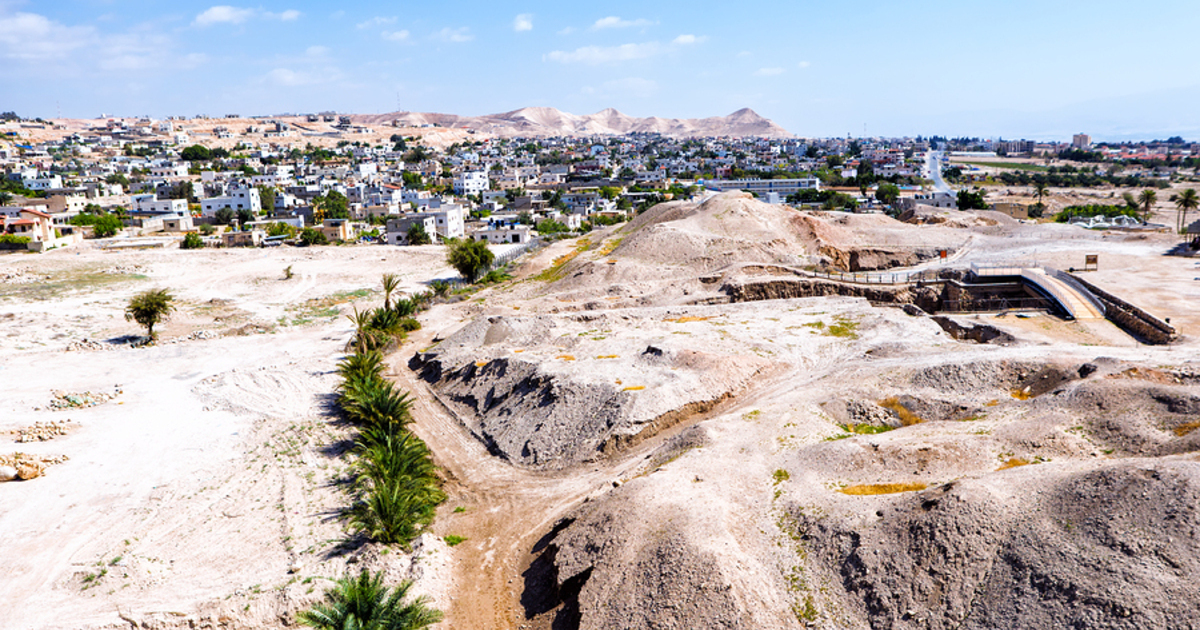
Jericho – One of the Oldest Cities in the World
Jericho lies in the lowest region on earth within the Jordan Valley, approximately 6.2 miles from the Dead Sea and 16.7 miles from Jerusalem. Situated about 250 meters below sea level, Jericho is often recognized as the oldest continually inhabited city in the world and one of the most historically and biblically significant destinations in Israel.
Despite being surrounded by hot desert terrain, Jericho flourishes because of its abundant freshwater springs. The Hebrew meaning of Jericho is “fragrant,” and throughout history it has been called the “City of Palms” because of its lush palm groves and fertile land. Today, travelers visiting on a Holy Land Israel tour are amazed by the contrast between the dry wilderness and the thriving oasis that has sustained civilizations for thousands of years.
Although Jericho is not always included on standard itineraries, it remains one of the most highly recommended extensions for visitors interested in biblical history, archaeology, and Scripture. Many travelers choose to include Jericho as part of their Israel tour experience because of its strong connection to both the Old and New Testaments.
Ancient Jericho and Tel es-Sultan
North of modern Jericho stands the ancient mound known as Tel es-Sultan, a UNESCO World Heritage site believed by archaeologists to contain the ruins of the oldest city in the world. Excavations have uncovered ancient walls, towers, and structures dating back thousands of years, offering remarkable evidence of human civilization long before the rise of many ancient empires.
The ancient city was originally a Canaanite city mentioned throughout the Scriptures. By the time of Jesus, much of ancient Jericho may already have been in ruins, while a newer city expanded nearby under the leadership of Herod the Great. Herod transformed Jericho into a luxurious winter retreat complete with aqueducts, irrigation systems, gardens, and magnificent palaces.
Visitors today can stand among these archaeological remains and witness firsthand how biblical history and archaeology intersect in a powerful and unforgettable way. Exploring Jericho during your travel to the Holy Land brings the pages of the Bible vividly to life.
Jericho in the Old Testament
The biblical history of Jericho begins long before the Israelites entered the Promised Land. In Deuteronomy 34:3, Moses stood on Mount Nebo and looked across the Jordan Valley toward “the plain of the valley of Jericho, the city of palm trees.” Although Moses would never enter the Promised Land himself, Jericho became the first major city encountered by the Israelites under the leadership of Joshua.
The conquest of Jericho remains one of the most dramatic moments in the Bible. According to Joshua chapter 6, God instructed the Israelites to march around the city walls once a day for six days while carrying the Ark of the Covenant. On the seventh day, they marched around the city seven times, and when the priests blew their trumpets and the people shouted, the mighty walls of Jericho collapsed.
“By faith the walls of Jericho fell, after the army had marched around them for seven days.” – Hebrews 11:30
This miraculous victory demonstrated that Israel’s success depended not on military power alone, but on obedience and faith in God. For Christian pilgrims visiting Jericho today, the story serves as a reminder that God is able to overcome every obstacle and fulfill His promises.
Rahab – A Story of Faith and Redemption
One of the most inspiring stories connected to Jericho is the account of Rahab, the woman who protected the Israelite spies sent by Joshua. Rahab lived in a house built into the city wall and courageously hid the spies from the king’s soldiers.
“The Lord your God is God in heaven above and on the earth below.” – Joshua 2:11
Rahab’s faith and actions saved not only her own life but also her entire family. She later became part of the genealogy of Jesus Christ, showing how God’s grace reaches people from every background. Her story is often highlighted during Christian Holy Land tours because it powerfully illustrates redemption, faith, and God’s mercy.
Prophecy and Fulfillment in Jericho
After the destruction of Jericho, Joshua pronounced a solemn prophecy over the city:
“Cursed before the Lord is the one who undertakes to rebuild this city, Jericho.” – Joshua 6:26
This prophecy was later fulfilled during the reign of King Ahab, when Hiel of Bethel rebuilt Jericho and tragically lost his sons, just as Joshua had foretold (1 Kings 16:34). These events reveal the seriousness of God’s word and demonstrate the remarkable consistency of biblical prophecy throughout Scripture.
Jericho continued to play a role throughout Israel’s history. During the time of the Judges, the region fell under the control of King Eglon of Moab for eighteen years before God raised up Ehud to deliver Israel (Judges 3:12–30).
Elijah, Elisha, and the Waters of Jericho
Jericho was also closely connected with the prophets Elijah and Elisha. In 2 Kings 2:19–22, the prophet Elisha healed the bitter waters of Jericho, making them pure and life-giving once again.
“This is what the Lord says: ‘I have healed this water. Never again will it cause death or make the land unproductive.’” – 2 Kings 2:21
Even today, visitors can see the traditional “Spring of Elisha,” which continues to provide fresh water to the region. For pilgrims, this miracle symbolizes God’s power to restore, heal, and renew what was once broken.
Jesus in Jericho
In the New Testament, Jericho became one of the important cities visited by Jesus during His ministry. The Gospels describe several remarkable encounters that took place there, making Jericho a meaningful stop during any Christian trip to Israel.
One of the most well-known miracles involved the healing of blind Bartimaeus near Jericho:
“Jesus, Son of David, have mercy on me!” – Mark 10:47
Because of his faith, Bartimaeus received his sight and followed Jesus. This miracle demonstrates Christ’s compassion and divine authority, themes that continue to inspire believers today.
Jericho is also remembered for Jesus’ encounter with Zacchaeus, the wealthy tax collector who climbed a sycamore tree in order to see Jesus pass by.
“Today salvation has come to this house.” – Luke 19:9
Despite public criticism, Jesus chose to stay in Zacchaeus’ home, transforming his life completely. This story powerfully reveals Christ’s mission to seek and save the lost. Pilgrims visiting Jericho often reflect on how Jesus still changes lives today just as He did in biblical times.
The Road from Jerusalem to Jericho
The famous road through the Wadi Qelt wilderness connects Jerusalem and Jericho and forms the setting for the Parable of the Good Samaritan.
In Luke 10:25–37, Jesus described a man traveling from Jerusalem to Jericho who was attacked by robbers and left injured on the roadside. Religious leaders passed by without helping him, but a Samaritan showed compassion and mercy.
“Go and do likewise.” – Luke 10:37
This parable remains one of the greatest teachings on love, mercy, and compassion. Seeing the actual landscape between Jerusalem and Jericho helps visitors understand the realism of Christ’s teaching and the dangers travelers once faced on this steep desert road.
Why Jericho Matters on a Holy Land Tour
Jericho is much more than an archaeological site—it is a living testimony to the truth and depth of Scripture. Every corner of the city connects visitors with biblical events, prophecies, miracles, and teachings that continue to shape Christian faith around the world.
When travelers visit Jericho during their Holy Land pilgrimage, they are not simply observing ancient ruins. They are walking through the pages of the Bible itself. From Joshua and Rahab to Elisha, Bartimaeus, Zacchaeus, and Jesus, Jericho reveals the faithfulness of God across generations.
Standing among the ruins of ancient walls, gazing across the Jordan Valley, and reflecting on Scripture creates an unforgettable spiritual experience that strengthens faith and deepens understanding of the Bible.
Experience Jericho for Yourself
The final biblical mention of Jericho appears in Hebrews, where the author reminds believers that faith brought the walls of Jericho crashing down. Soon afterward, the city itself would face destruction during the Roman suppression of the Jewish revolt in AD 70.
Today, travelers can still stand among the ruins of this ancient city and witness one of the Bible’s most remarkable locations with their own eyes. Jericho remains a destination where archaeology, history, prophecy, and faith come together in extraordinary ways.
Whether you are exploring the ancient ruins of Tel es-Sultan, reflecting on the faith of Rahab, remembering the miracles of Jesus, or traveling the road of the Good Samaritan, Jericho offers an unforgettable connection to the world of the Bible during your Christian travel experience in Israel.
Experience Jericho & the Holy Land for Yourself
Walk through the ancient city of Jericho, explore the places where biblical history unfolded, and deepen your faith on an unforgettable Christian pilgrimage to Israel.
Discover the walls of Jericho, the story of Zacchaeus, the miracles of Jesus, and many other sacred sites throughout the Holy Land with our expertly guided Christian tours.