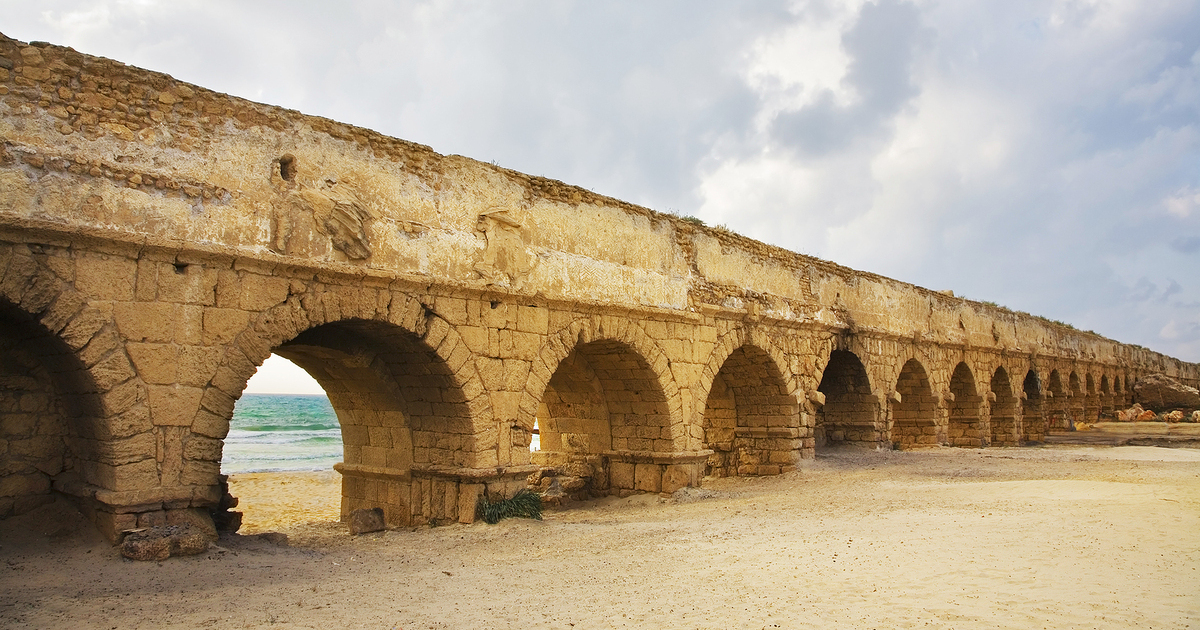
Caesarea: A City of Kings and Empires
A visit to Caesarea during your Christian tour to Israel is more than a historical excursion—it is a powerful spiritual experience. Walking through this ancient port city allows you to step into the pages of the Bible, where the message of Jesus Christ began to spread beyond Israel to the nations. Today, Caesarea stands as a remarkable place where history, archaeology, and Scripture come together in a profound way.
Built by the Roman Empire under the rule of Herod the Great, Caesarea was named in honor of Caesar Augustus. This same emperor is mentioned in the Gospel of Luke, where a decree went out that all the world should be registered, leading Joseph and Mary to travel to Bethlehem for the birth of Jesus Christ.
“In those days Caesar Augustus issued a decree that a census should be taken of the entire Roman world.” — Luke 2:1
This connection reminds visitors that the grand events of world empires were unfolding alongside God’s divine plan of salvation. Caesarea itself became one of the most important Roman cities in Judea, serving as a center of government, culture, and trade.
Caesarea in the New Testament
The significance of Caesarea extends deeply into the New Testament. It is here that some of the most pivotal moments in early Christianity took place, particularly in the ministry of the Apostle Peter and the Apostle Paul.
One of the most important events recorded in Scripture is the conversion of Cornelius, a Roman centurion. This moment marked a turning point in the spread of the Gospel, as the message of Jesus Christ was extended to the Gentiles.
“Then Peter began to speak: ‘I now realize how true it is that God does not show favoritism but accepts from every nation the one who fears Him and does what is right.’” — Acts 10:34–35
In Caesarea, Peter baptized Cornelius, becoming the first recorded instance of a Gentile receiving the Gospel. This moment fulfilled God’s plan that salvation through Christ would be available to all people, not just the Jewish nation.
“Can anyone keep these people from being baptized with water? They have received the Holy Spirit just as we have.” — Acts 10:47
The Apostle Paul and Caesarea
Caesarea also played a major role in the life and ministry of the Apostle Paul. It was here that Paul was imprisoned by the Roman authorities for two years. During this time, he boldly defended his faith before governors and rulers.
“After two whole years, Paul stayed there in his own rented house and welcomed all who came to see him. He proclaimed the kingdom of God and taught about the Lord Jesus Christ—with all boldness and without hindrance!” — Acts 28:30–31
Paul’s journey from Caesarea eventually led him to Rome, fulfilling God’s purpose for him to testify before kings and nations. His time in Caesarea reflects both the challenges and the faithfulness required of early Christians.
Additionally, Caesarea was home to Philip the Evangelist, one of the seven deacons chosen in the early church. His presence in the city further highlights Caesarea’s importance as a center of early Christian life and ministry.
A Center of Early Christianity
During the Byzantine period, Caesarea became a thriving Christian center. Many influential early church leaders lived and taught here, including Origen and Eusebius, who contributed significantly to the development of Christian theology and biblical scholarship.
This city became a place where believers gathered, studied Scripture, and spread the Gospel. It stands as a reminder of how the early church grew and flourished even under challenging circumstances.
Caesarea’s Antiquities Park
Today, visitors can explore Caesarea’s antiquities park, one of Israel’s most remarkable archaeological sites. The ruins span over 2,300 years of history, with remains from the 3rd century BC through the Crusader period in the 12th century.
Herod the Great transformed Caesarea into a magnificent city, constructing a massive harbor, Roman theater, bathhouses, temples, and a hippodrome for chariot racing. The city later became the capital of the Roman province of Judea.
Caesarea was given to King Herod by Augustus Caesar, and it quickly rose to prominence as a key port and administrative center.
As you walk through the ruins, you can still see the Roman theater, fortress walls, and ancient streets that once bustled with life. Each stone tells a story of the many civilizations that once occupied this land.
A City of Battles and Transformation
Throughout its history, Caesarea witnessed numerous battles and changes in power. From Roman rule to Byzantine Christianity, and later to Crusader fortifications, the city reflects the shifting tides of history.
Yet beyond its political and military significance, Caesarea stands as a symbol of spiritual transformation—the place where the Gospel crossed cultural boundaries and reached the Gentile world.
“Go into all the world and preach the gospel to all creation.” — Mark 16:15
Beauty Along the Mediterranean
In addition to its historical and biblical importance, Caesarea offers breathtaking views of the Mediterranean Sea. Visitors can enjoy modern cafés, restaurants, and beautiful sandy beaches alongside the ancient ruins.
This unique blend of past and present creates an unforgettable experience during your holy land trip . It is a place where you can reflect on Scripture while taking in the beauty of God’s creation.
Walking in the Footsteps of Scripture
Visiting Caesarea is not just about seeing historical landmarks—it is about encountering the living history of the Bible. As you walk through this ancient city, you are reminded of the faith, courage, and mission of the early church.
The stories of Peter, Paul, and the early believers come alive in a powerful way. Their journeys, challenges, and victories continue to inspire Christians today.
“Your word is a lamp for my feet, a light on my path.” — Psalm 119:105
Experience Caesarea on a Holy Land Tour
A visit to Caesarea is included in many itineraries, allowing travelers to experience this extraordinary site firsthand. During your Christian tour to Israel , you will walk through the same places where the early church grew and the Gospel spread to the nations.
This journey offers more than sightseeing—it provides a deeper understanding of Scripture and a renewed connection to your faith.
“So faith comes from hearing, and hearing through the word of Christ.” — Romans 10:17
A Journey That Strengthens Faith
For many travelers, visiting Caesarea becomes one of the most meaningful moments of their Holy Land journey. It is a place where history confirms Scripture, and where the message of Christ’s love and salvation continues to resonate.
Standing in Caesarea, you can reflect on the incredible spread of Christianity from a small group of believers to a worldwide faith that continues to transform lives today.
A visit here is not just a step back in time—it is a step deeper into your faith, a reminder of God’s plan for all nations, and an invitation to continue sharing the Gospel with the world.
Experience Caesarea on a Holy Land Tour
Walk in the footsteps of Scripture and explore the places where the early Church grew and the Gospel reached the nations. Join one of our fully escorted Holy Land tours and bring the Bible to life.